

Why Pharma Label Compliance Is Critical for Safety, Accuracy, and Brand Trust
In the highly regulated pharmaceutical industry, packaging labels are not just informational—they are critical components of product safety, traceability, and compliance. The role of a pharma label printing company India goes far beyond printing; it involves ensuring that every label meets strict regulatory, durability, and readability standards.
Pharmaceutical companies today face increasing pressure to maintain label regulations compliance across diverse product categories, distribution channels, and evolving government norms. Even minor errors—such as incorrect dosage information, poor print clarity, or non-durable materials—can lead to serious consequences including product recalls, regulatory penalties, and loss of consumer trust.
Key challenges businesses commonly encounter include:
- managing complex regulatory requirements across regions
- ensuring consistent print quality for critical information
- selecting materials that withstand storage and handling conditions
This is where experienced partners like Star Offset play a vital role. With a strong understanding of regulatory frameworks, advanced printing technologies, and quality-driven processes, they help pharma companies bridge the gap between compliance requirements and real-world execution.
This guide explores how design, materials, and printing technologies work together to create compliant, reliable, and future-ready pharma labels.
What Is Pharma Label Compliance and Why It Matters
Pharma label compliance refers to ensuring that every pharmaceutical label meets regulatory, safety, and quality standards set by governing authorities. It is essential for product approval, patient safety, and supply chain traceability.
A compliant pharma label must include:
- accurate product and dosage information
- clear and readable text for critical instructions
- durable materials that resist moisture, chemicals, and handling
- traceability elements such as barcodes and batch details
In contrast, non-compliant labels can result in:
- regulatory violations and penalties
- product recalls and operational disruptions
- reduced trust among healthcare providers and consumers
In essence, compliance is not just a requirement—it is a fundamental part of delivering safe and reliable pharmaceutical products.
Struggling with Pharma Label Compliance?
- Avoid costly regulatory errors with expert-led solutions
- Ensure accuracy, durability, and compliance in every label
- Get guidance tailored to your pharma packaging needs
Why Compliance Challenges in Pharma Label Printing Create High-Risk Packaging Failuresue
In the pharmaceutical industry, label accuracy is not optional—it is a regulatory necessity. A pharma label printing company India must ensure that every label meets strict compliance standards related to safety, traceability, and information clarity. However, many businesses struggle to maintain label regulations compliance due to the complexity of evolving guidelines and operational limitations.
The core issue lies in the gap between regulatory requirements and execution. Pharma companies often rely on multiple vendors or outdated processes, leading to inconsistencies that can compromise compliance and product safety.
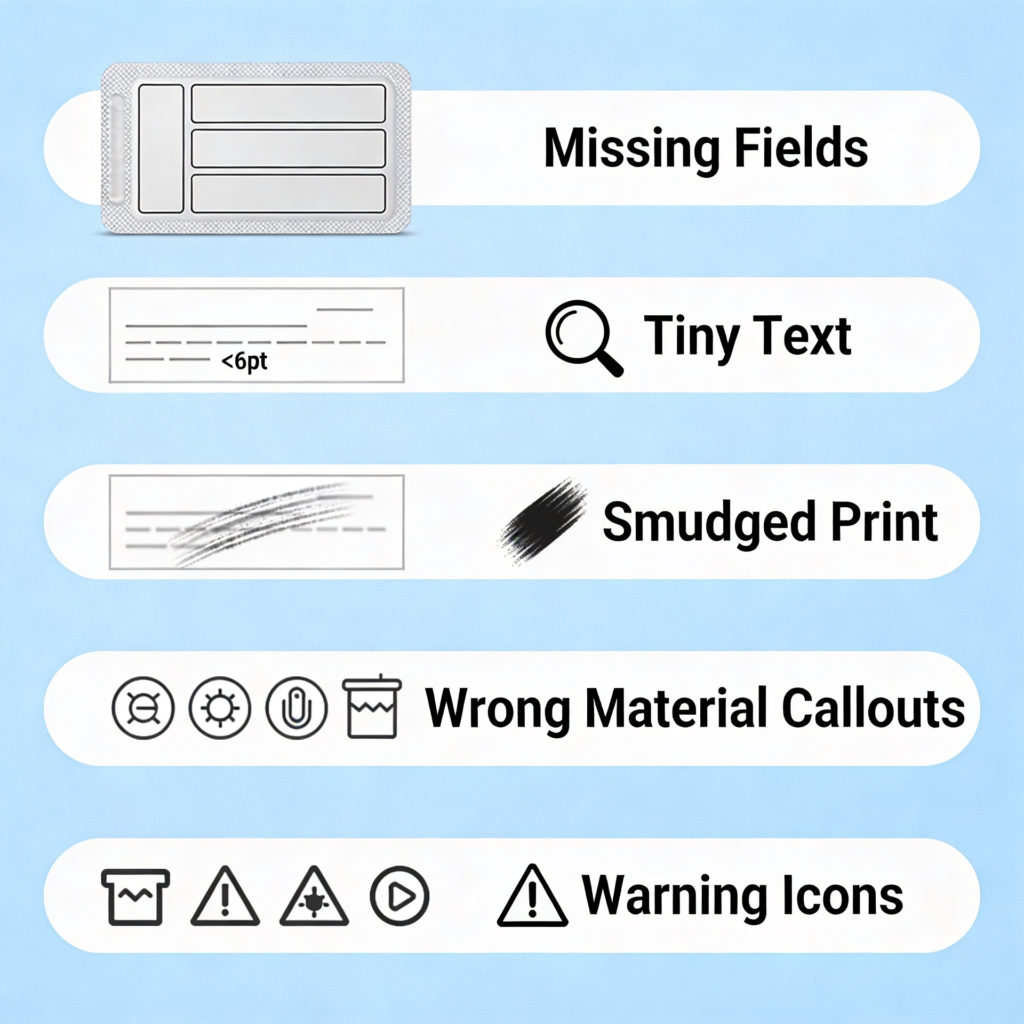
Common compliance challenges include:
- Missing or incorrect information such as dosage details, batch numbers, or warnings
- Poor print clarity, making critical instructions difficult to read
- Incorrect material selection, resulting in labels that degrade under storage or transport conditions
- Lack of integration between design, printing, and quality control processes
These issues typically arise due to:
- limited understanding of regulatory frameworks across different markets
- inadequate prepress validation and proofreading systems
- absence of structured quality assurance protocols
Even experienced providers like Star Offset have observed that many pharma brands underestimate the importance of aligning design, materials, and printing technologies—leading to avoidable compliance risks.
Common Pharma Label Printing Mistakes and Their Impact
Compliance Issue | Root Cause | Business Impact |
Missing regulatory data | Poor artwork validation | Regulatory rejection, recalls |
Low readability | Inconsistent print quality | Safety risks, user confusion |
Label degradation | Wrong substrate selection | Product damage, compliance failure |
Inconsistent batches | Lack of QC systems | Brand credibility loss |
Ignoring these challenges can result in:
• regulatory penalties and delayed approvals
- product recalls and supply chain disruptions
- increased operational costs due to rework
- long-term damage to brand trust and market reputation
For pharmaceutical companies, ensuring compliance is not just about meeting regulations—it is about safeguarding patient safety and maintaining business continuity.
How to Ensure Compliance, Accuracy, and Quality with a Pharma Label Printing Company India
Ensuring compliant pharma packaging labels requires a structured, end-to-end approach that integrates design accuracy, material performance, and precision printing. A reliable pharma label printing company India plays a critical role in aligning regulatory requirements with real-world production, helping businesses reduce risks and maintain consistency.
The solution lies not in a single step, but in a coordinated workflow that connects design, validation, material selection, printing, and inspection.
Step-by-Step Framework for Compliant Pharma Label Printing
A successful pharma labeling process typically follows these stages:
- Design with Regulatory Precision
Label design must incorporate all mandatory information clearly and accurately.
• Include dosage, composition, warnings, batch details, and expiry dates
• Maintain proper font size, spacing, and hierarchy for readability
• Align layout with label regulations compliance guideline - Prepress Validation and Proofing
Errors at the design stage can lead to costly compliance failures.
• Conduct detailed artwork checks for accuracy and completeness
• Use digital and physical proofs for validation
• Ensure barcode and traceability elements function correctly - Material Selection for Durability and Safety
Choosing the right substrate is essential for long-term performance.
• Use materials resistant to moisture, chemicals, and temperature changes
• Ensure adhesion quality for different packaging surfaces
• Opt for eco-friendly pharma labels where sustainability is a priority - Precision Printing and Batch Consistency
Advanced printing technologies ensure uniform output across volumes.
• Maintain color consistency and sharp text clarity
• Use high-resolution printing for small fonts and critical data
• Implement inline monitoring systems to detect deviations - Quality Inspection and Compliance Verification
Final checks are crucial before labels reach the market.
• Conduct batch-wise inspection for print accuracy and durability
• Verify regulatory information and alignment
• Ensure labels meet both internal QA standards and regulatory norms
Key Factors That Influence Pharma Label Compliance
Beyond the process, several critical factors determine the effectiveness of pharma labels:
- Regulatory Alignment– Keeping up with evolving compliance standards across markets
- Material Performance – Ensuring labels withstand storage, handling, and transportation
- Print Accuracy – Maintaining clarity for critical medical information
- Traceability Systems – Incorporating barcodes and batch tracking for supply chain transparency
Comparison of Key Labeling Considerations
Factor | Requirement | Impact on Compliance |
Design Accuracy | Complete and structured information | Prevents regulatory rejection |
Material Quality | Durable and compatible substrates | Ensures long-term readability |
Printing Technology | High-resolution, consistent output | Reduces errors and rework |
Quality Control | Multi-stage inspection | Maintains batch consistency |
Key Insight:
Compliance in pharma labeling is achieved when design, material, and printing processes are fully integrated—not treated as separate steps.
Role of Technology and Expertise in Modern Pharma Label Printing
Modern pharma packaging demands more than traditional printing capabilities. It requires technology-driven systems that ensure accuracy, traceability, and repeatability.
Advanced solutions include:
• automated inspection systems for real-time quality checks
• barcode verification tools for traceability compliance
• digital workflows that reduce manual errors
Organizations like Star Offset demonstrate how combining regulatory expertise with advanced printing infrastructure enables pharma companies to maintain compliance while scaling production efficiently.
Integrating Sustainability Without Compromising Compliance
Sustainability is becoming a key consideration in pharmaceutical packaging. However, it must be implemented without affecting compliance or performance.
Best practices include:
• using recyclable and certified materials for eco-friendly pharma labels
• selecting inks and adhesives that meet safety and environmental standards
• optimizing label design to reduce material usage without compromising readability
The goal is to balance environmental responsibility with regulatory precision—ensuring labels remain durable, compliant, and efficient.
Ensure 100% Compliant Pharma Labels
- Get expert support on design, materials, and printing processes
- Minimise compliance risks with structured and reliable workflows
- Achieve consistent, high-quality pharma labeling across batches
Evolving Pharma Label Printing Trends in India: Compliance, Technology, and Sustainability
The pharmaceutical packaging industry in India is undergoing a significant transformation, driven by stricter regulations, technological advancements, and growing sustainability expectations. For any pharma label printing company India, adapting to these changes is essential to ensure long-term compliance and operational efficiency.
One of the most notable shifts is the increasing regulatory scrutiny across domestic and export markets. Authorities now demand higher levels of accuracy, traceability, and documentation, making label regulations compliance more complex than ever. This has pushed pharma companies to adopt more structured and technology-driven labeling processes.
At the same time, sustainability is influencing packaging decisions. The move toward eco-friendly pharma labels is gaining momentum, with companies exploring recyclable substrates, low-impact inks, and reduced material usage—without compromising durability or compliance.
Key Industry Trends Shaping Pharma Label Printing
Several important developments are redefining how pharma labels are designed and produced:
- Digital Verification & Traceability
Integration of barcodes, QR codes, and serialization systems ensures product authenticity and supply chain transparency - High-Precision Printing Technologies
Advanced printing systems enable consistent reproduction of critical information, especially for small fonts and complex layouts - Automated Quality Control Systems
Inline inspection and AI-driven validation tools help detect errors early, reducing compliance risks - Sustainable Material Innovation
Adoption of recyclable and compliant materials supports environmental goals while maintaining label performance
Industry Shift Comparison
Trend Area | Traditional Approach | Modern Approach |
Compliance | Manual checks | Automated validation systems |
Traceability | Basic barcodes | Advanced serialization & QR tracking |
Materials | Standard substrates | Eco-friendly, certified materials |
Quality Control | Post-production inspection | Real-time inline monitoring |
Expert Insight:
“Pharma labeling is no longer just about printing—it is about integrating compliance, technology, and sustainability into a single, reliable system.”
Organizations like Star Offset are aligning with these industry shifts by combining regulatory expertise with advanced printing infrastructure and quality-driven workflows. This enables pharma companies to not only meet current compliance standards but also stay prepared for future regulatory and market demands.
How a Pharma Brand Improved Compliance with a Structured Label Printing Approach
In a highly regulated environment, a mid-sized pharmaceutical company in India began facing repeated compliance issues during product approvals. Despite having well-formulated products, their packaging labels failed to meet label regulations compliance standards, leading to delays and rejections. This is a common challenge where the role of a pharma label printing company India becomes critical in bridging execution gaps.
Situation:
The company relied on multiple vendors for label design and printing, resulting in inconsistent output. Labels often lacked clarity, and some batches contained incorrect or poorly formatted information.
Challenge:
• Frequent regulatory observations due to missing or unclear data
• Inconsistent print quality affecting readability
• Label degradation under storage conditions
• Increased rework, delays, and operational costs
Solution:
To resolve these issues, the company adopted a structured, end-to-end labeling process with guidance from experienced providers like Star Offset:
• Standardized label design aligned with compliance requirements
• Implemented prepress validation and multi-level proofing systems
• Selected durable and eco-friendly pharma labels suitable for storage conditions
• Used precision printing technologies with integrated quality checks
Outcome:
• Significant reduction in compliance errors and rejections
• Improved label clarity and consistency across batches
• Faster regulatory approvals and streamlined production cycles
• Enhanced trust among regulators, distributors, and healthcare professionals
This scenario highlights how aligning design, materials, and printing processes—supported by expert-driven workflows—can transform pharma labeling from a compliance risk into a reliable operational strength.
Key Insights for Ensuring Compliant and High-Quality Pharma Packaging Labels
- Compliance is non-negotiable in pharmaceutical packaging, as even minor errors in labeling can lead to regulatory delays, product recalls, and safety risks
- A reliablepharma label printing company Indiaensures that design, material, and printing processes are fully aligned with label regulations compliance standards
- Structured workflows—from design validation to final inspection—are essentialfor maintaining accuracy, consistency, and traceability across batches
- Materialselection plays a critical role, with durable and eco-friendly pharma labels supporting both compliance requirements and sustainability goals
- Advanced printing technologies and quality control systems help deliverhigh precision, readability, and batch consistency
- Partnering with experienced providers like Star Offsetenables pharma companies to bridge the gap between regulatory requirements and real-world execution
- Integrating compliance, technology, and sustainabilitycreates a future-ready labeling strategy that supports long-term operational efficiency and brand trust

Frequently Asked Questions About Pharma Label Printing Compliance and Standards
1. What are the key compliance requirements for pharma labels in India?
Pharma labels in India must include accurate product details such as composition, dosage, batch number, expiry date, and regulatory warnings. They must meet label regulations compliance standards for readability, traceability, and durability. Regulatory bodies also require clear formatting and validated information to ensure patient safety and product authenticity.
2. Why is durability important in pharma label printing?
Durability ensures that labels remain intact and readable throughout storage, transportation, and usage. Pharma products often face exposure to moisture, temperature changes, and handling conditions. Poor durability can lead to information loss, compliance failures, and safety risks, making material and adhesive selection critical.
3. What materials are used for eco-friendly pharma labels?
Eco-friendly pharma labels typically use recyclable paper-based substrates, low-impact inks, and compliant adhesives. These materials are designed to meet both environmental goals and regulatory standards without compromising durability or readability, helping companies align sustainability with compliance requirements.
4. How do printing technologies affect compliance and quality?
Advanced printing technologies ensure high-resolution output, consistent color accuracy, and precise reproduction of small text and barcodes. This improves readability and traceability, which are essential for compliance. Modern systems also include automated inspection tools that reduce errors and maintain batch consistency.
5. How to choose a reliable pharma label printing company India?
Businesses should evaluate expertise in regulatory compliance, printing technology, material knowledge, and quality control systems. A trusted pharma label printing company India like Star Offset combines process-driven workflows with advanced infrastructure, helping pharma companies achieve accurate, durable, and compliant labeling solutions.
Conclusion
Pharma packaging labels are a critical link between regulatory compliance, product safety, and brand trust. Ensuring accuracy, durability, and clarity requires more than just printing—it demands a structured approach that aligns design, materials, and technology with strict label regulations compliance standards.
Choosing the right pharma label printing company India plays a vital role in minimizing risks and maintaining consistency across every batch. Experienced partners like Star Offset bring the expertise, infrastructure, and process-driven execution needed to translate compliance requirements into reliable outcomes.
For pharmaceutical businesses, investing in the right labeling strategy is essential for long-term efficiency, regulatory success, and market credibility.
Ready for Error-Free Pharma Label Printing?
- Ensure compliance, clarity, and consistency in every label batch
- Reduce risks with expert-led printing and quality processes
- Get tailored solutions for your pharma packaging requirements